
Where to start with your important documents
You don’t have to organise your whole life in one sitting. Start with the information you would most need to find again.
A useful conversation can start with three things: who to contact, where information is kept, and what you want to share.

Think about a person you would call if life became complicated. They might be a partner, a friend, a neighbour, or a family member. What would they need to know to help you?
The answer is rarely “everything.” It is usually a few pieces of information that connect them to the right people, documents, or next step.
Ask the person whether they are comfortable being part of your plan. Explain what kind of help you have in mind. A travel companion might need insurance contact details. A friend helping you while you are away might need a number for someone responsible for your home.
The information and responsibility should make sense to both people. A name on a list is less useful than a conversation about what that name means.
The American Red Cross recommends planning how household members will get in touch when they are separated. Its guidance includes discussing responsibilities, keeping important contact information, and practising the plan.
For your own circumstances, begin by checking that the relevant numbers are current. Think about whether the person helping you knows whom to call and what to say. Keep a written contact list as well as the version on your phone when that would help your plan.
You can begin with a small set of information: an insurer’s contact details, the location of a document, or the person who can answer a question. You do not have to share a whole folder because one item might be useful.
Be clear about what is personal and how it should be used. Avoid treating account passwords as a substitute for a proper access arrangement. Where access or authority matters, check the requirements with the organisation involved.
People and circumstances change. Someone who helped on a trip may not need the same information afterwards. A contact person may move, or a phone number may change.
Review the arrangement together when it needs updating. The goal is a clear understanding, rather than a one-time act of handing information over and forgetting about it.
In Asylia, the planned sharing experience is selective and works both ways: you choose information to share, and can keep information others share with you in the same app. Each person would control their own sharing and be able to stop it.
That is the intended product direction, not a description of a released app. We’re still building it. The practical starting point is already available, though: have a conversation with someone you trust about what would actually help.
Keep reading
You don’t have to organise your whole life in one sitting. Start with the information you would most need to find again.
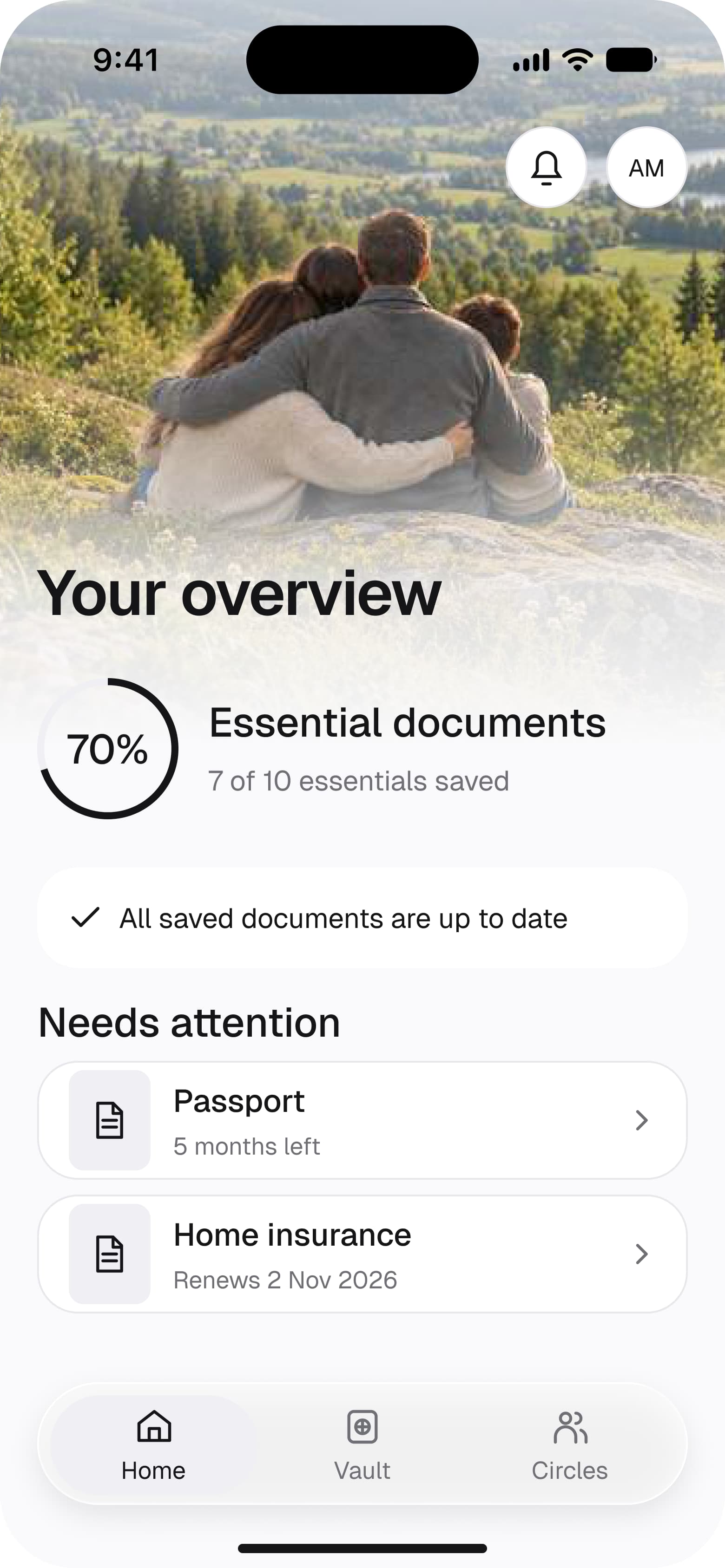
One app for the important information in your life. Here is the purpose behind it, and the first things we are focusing on.
The next chapter
Follow our progress and hear when Asylia is ready. We’re building for people living alone, families, and anyone caring for someone else.
We’re working toward an early version in 2027, starting in the United States.